


Newsletter of the main news 24.11/30.11
All newsDate
30 Nov 2025

- Telegram


1️⃣ Frozen Russian Assets
French President Emmanuel Macron stated that a decision on the use of frozen Russian assets will be finalized in the coming days. The EU and key partner states are coordinating a mechanism that would secure predictable financing for Ukraine while maintaining pressure on Russia. Macron also underscored the importance of security guarantees and a strong Ukrainian army to deter future aggression.
UK Prime Minister Keir Starmer announced that Britain is ready to work with the EU to finance Ukraine using the value of Russia’s immobilised assets. He stressed the urgency of decisions on funding and capabilities, noting that strong support now is essential to signalling to Putin that negotiations—not attrition—are the only path forward.
The EU is preparing a “Plan B” in case a reparations-based loan for Ukraine is delayed due to Belgium’s objections concerning the use of frozen Russian assets. One option under discussion is a temporary EU-funded bridging loan to cover Ukraine’s needs in early 2026, later repaid through the long-term reparations mechanism once agreed by all member states.
The European Commission is drafting legislation to enable the use of Russia’s frozen assets to support Ukraine through 2026–2027. President Ursula von der Leyen emphasized that European taxpayers cannot be the sole source of support and that any mechanism must comply with EU and international law. Belgium continues to demand legal safeguards, given that most assets are held at Euroclear.
Euroclear has warned the EU that using Russia’s frozen assets as the basis for a “reparations loan” could damage Europe’s financial markets by being perceived as a de facto confiscation of central bank reserves. In a letter to EU leadership, the company highlighted potential legal challenges from Russia and said Euroclear must be protected under any future scheme.
According to Politico, several EU diplomats suspect that Belgium may have a financial incentive in delaying the reparations-loan mechanism, as tax revenues from frozen Russian assets remain within the Belgian budget. Brussels denies any wrongdoing, insisting that all tax income generated from immobilised assets at Euroclear is directed to support Ukraine.
2️⃣ International Sanctions Policy
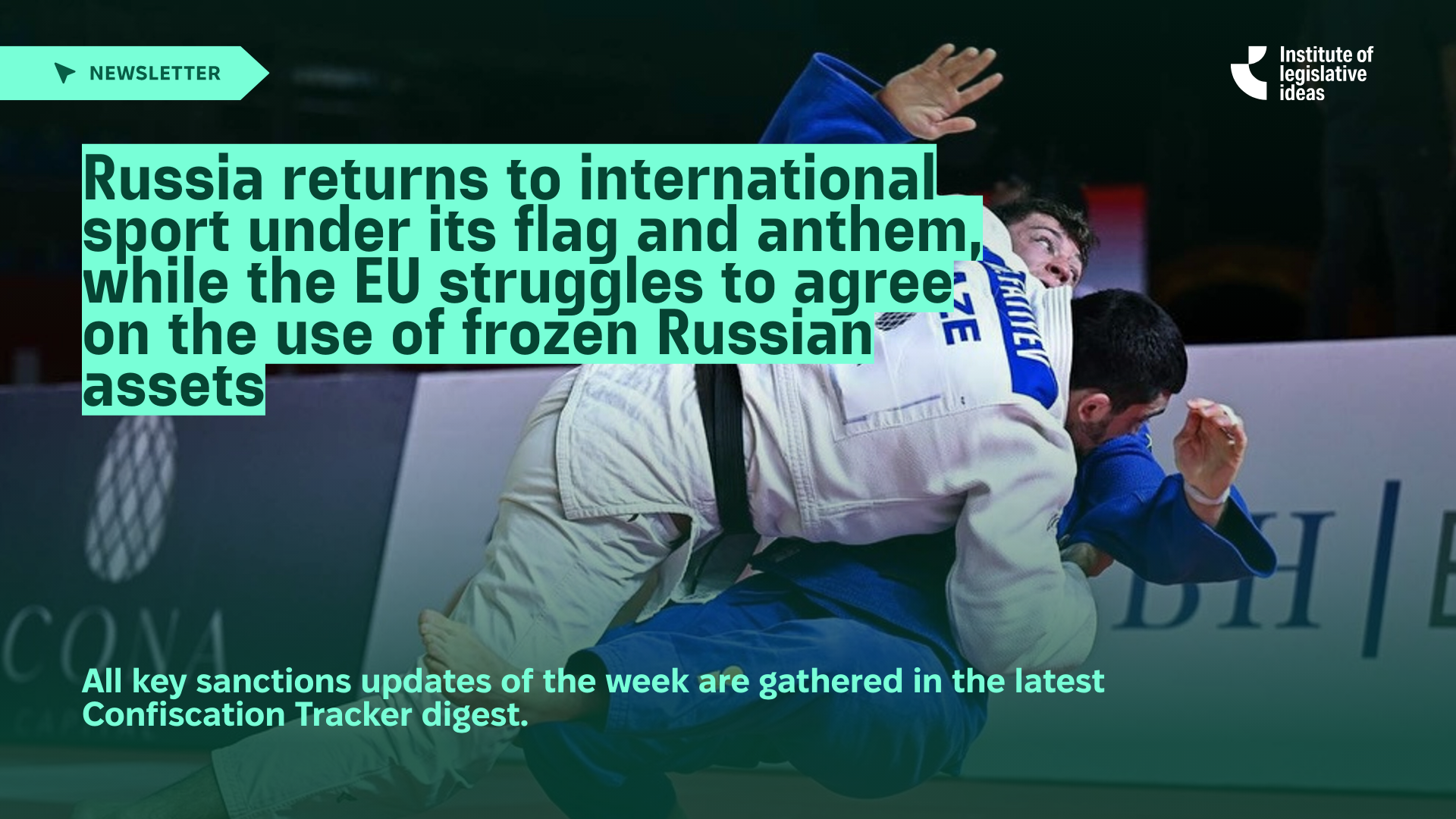
The International Judo Federation has restored full national representation for Russian athletes, allowing them to compete under their flag and anthem starting with the 2025 Abu Dhabi Grand Slam. IJF argued that sport should remain apolitical and that Russia’s return would “enrich competitions.” Belarusian athletes were reinstated earlier this year.
The EU has postponed its 20th sanctions package against Russia until at least January, Politico reports. No progress is expected before the winter holidays, and the Commission will present initial proposals early next year. The upcoming package is expected to focus on closing loopholes, tightening export controls, and reducing Russian revenues from the shadow fleet.
The United Kingdom has delayed sanctions against Lukoil’s international division until February 26, 2026, according to Bloomberg. A general licence will allow the company to continue transactions during this period. The measures were originally scheduled to take effect on November 28.
3️⃣ Sanctions Violations and Evasion
Russians continue buying apartments in Finland through a legal loophole that allows property acquisition via housing company shares. Thousands of such listings appear on Russian-language sites, including purchases by individuals with questionable income sources. Finland’s Defence Minister Antti Häkkänen acknowledged the security risks and announced plans to tighten legislation.
In the Netherlands, court proceedings have begun against Damen Shipyards, accused of circumventing sanctions by covertly exporting components for Russian vessels and falsifying export declarations. Prosecutors say the alleged actions could have strengthened Russia’s military capabilities. If found guilty, the company may lose access to government contracts.
4️⃣ Ukraine’s Sanctions Policy
Ukraine has imposed sanctions on 56 vessels involved in exporting stolen agricultural products from the occupied ports of Sevastopol and Feodosia. The list includes ships sailing under foreign flags, and Kyiv will work with flag states to revoke relevant licences. Many of these vessels are already sanctioned by the EU, the U.S., and Switzerland as Ukraine intensifies coordinated pressure on Russia